

Mathematics
Mathematics
Teaching Staff
|
01/ |
Ms Wang Cuiyin
|
02/ |
Ms Tham Jianyun |
03/
|
Ms Erlinda Tanuwijaya
|
|---|---|---|---|---|---|
|
04/ |
Mdm Tan Kim Kim Felicia
|
05/ |
Mrs Alicia Tan
|
06/
|
Ms Eunice Lee Teacher Mathematics
|
|
07/ |
Mr Hong Guangyu William
|
08/ |
Mr Aw Zhi Zhong, Aloysius
|
09/
|
Mr Chew Wei Sheng Teacher Mathematics |
|
10/ |
Mr Yong Mun Chong Teacher Mathematics |
11/ |
Mr Chian Siau Yong Teacher Mathematics
|
|
Mathematics
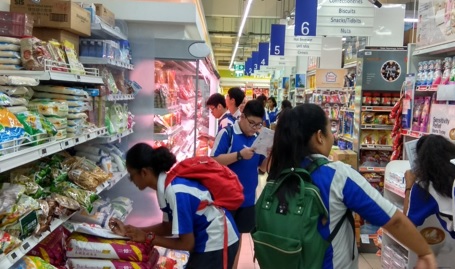
Curriculum
Our Mathematics curriculum aims to equip our pupils with Mathematical skills, processes and concepts so that they can develop metacognition and positive attitudes to be effective and creative problem solvers in life.
T & L Framework
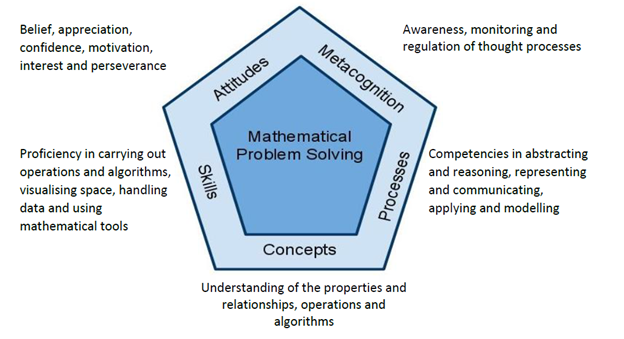
Our department programmes strive to equip our pupils with Mathematical skills, processes and concepts to solve problems in a variety of contexts within and outside Mathematics. Our teachers conscientiously practice the three phases of learning in the classroom – Readiness to Learn, Engagement in Learning and Mastery in Learning.
The engagement phase includes one or more of the three pedagogical approaches to support most of the Mathematics instructions in classroom – Activity-based Learning, Inquiry-based Learning and Direct Instruction.
The following subjects are offered at the three teaching groups.
|
Teaching Group |
Subject(s) offered |
|
G3 Level |
|
|
G2 Level |
|
|
G1 Level |
|
Mathematics Programme
Learning Opportunities for Students
Mathematics and Additional Mathematics
We provide opportunities for students to
-
enhance conceptual understanding through use of various mathematical tools including ICT tools;
-
apply concepts and skills learnt in real-world context;
-
communicate their reasoning and connections through various mathematical tasks and activities;
-
build confidence and foster interest in mathematics.
Engaged Learning in the Mathematics Classroom
Students were given opportunities to discuss key concepts and develop a deeper understanding of them, (e.g. By generalising concepts through pattern recognition)

E-pedagogical tools such as the Feedback Assistant – Mathematics in SLS were used to provide students with hints and instant feedback, making the learning of mathematics more engaging and effective.

Digital and physical activities were used to make mathematics practice more engaging and motivating, while building subject mastery and nurturing students’ joy of learning.

Infusing digital literacies such as computational thinking in the teaching of Mathematical concepts, by guiding them to create flow charts, enables them to make their thinking visible. Through scaffolded learning, collaboration and communication, students strengthen their problem-solving skills and retention of concepts.

Extending Learning beyond the Mathematics Classroom
Talent Development – Innovation JeWel Programme
Students with a strong passion and talent for Mathematics are given opportunities to deepen their learning and sharpen their critical thinking. In the Innovation JeWel Programme, students collaborate on interdisciplinary STEM projects, where they creatively seek solutions to tackle sustainability challenges while developing essential communication and teamwork skills.

Competitions – Singapore Mathematical Olympiad & Australian Mathematics Competition
Students with potential and interest in Mathematics are
• exposed to higher forms of Mathematical training beyond the curriculum.
• provided with opportunities to further stretch their abilities in National-Level Competitions such as Singapore Mathematical Olympiad and Australian Mathematics Competition.
